



RTX 5080 Owner Claims DLSS 5 Killed His GPU, But Did It Really?


That's exactly what supposedly happened to Redditor /u/wax469. The tale he tells is a grisly one and his video in the thread is even worse, but it's not at all unbelievable, and many Redditors in the thread agree. You see, DLSS 5 really could have helped his GPU give up the ghost despite that it was fine for a month beforehand, but it wasn't because DLSS 5 is inherently dangerous to graphics cards (it isn't, really). Instead, the issue is that DLSS 5 puts an incredibly heavy load on the GPU, fully loading the Blackwell architecture's massive tensor cores in a way that simply doesn't happen with normal gaming.

This, understandably, draws a lot of power, and thus creates a lot of heat; the GPU can actually exceed its power limit and your performance becomes limited by the power delivery of the graphics card rather than any other factor. Many graphics cards are designed and tested under gaming workloads, and so they aren't really meant for the kind of sustained, saturating heat load that AI and compute workloads can produce. So saying, it may be the case that we see a reports here and there of failed graphics cards when DLSS 5 becomes more commonplace, especially as the GeForce RTX 50 cards will be two years old this coming January.
Still, you certainly wouldn't expect that running the card that way for "a few minutes" would produce a failure, and especially not a catastrophic hardware failure like /u/wax469 says. He RMA'd his card and got a replacement, thankfully, but he's elected to stay away from DLSS 5 mods and stick to official implementations. However, it's very unlikely that the modded nature of the DLSS 5 he was using had anything to do with the GPU failure, and most likely, his card was simply marginal from the start. It may have been fine for months or even years of standard gaming, but the heavy load of DLSS 5 exposed a fault or defect in the card, like a stress test.
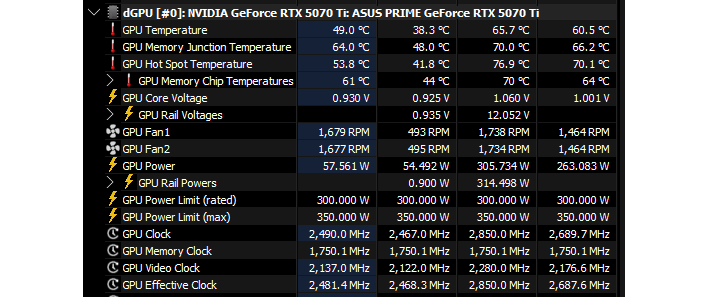
If you're keen to start gaming with DLSS 5, you'd better make sure your power supply and cooling hardware are up to snuff. While in theory your GPU should be able to handle running at its thermal limit indefinitely, in practice, the cooler you can get it, the better, but it may be difficult to get airflow to the critical power delivery components which are covered by the heatsink. In theory, your AIB manufacturer should have supplied those components with thermal pads, but there have been issues in the past, so it doesn't hurt to load up HWiNFO and take a look at those temperatures now and again.
With that said, /u/wax469's issue probably wasn't heat-related, and he most likely simply suffered poor luck of the draw. The silicon lottery comes for all of us. Especially now as GPU prices are sky-high and availability is at an all-time low, maybe give your GPU a break and play some of those older games in your Steam backlog.





