



Qualcomm Unveils Dragonwing IQ10 Advanced AI Robotics Reference Design


At a Computex 2026 keynote in Taiwan, Qualcomm CEO Cristiano Amon showed off the upgraded Dragonwing IQ10 Robotics Reference Design (RRD), a fully enclosed development blueprint claiming to eliminate hardware bottlenecks currently slowing down the robotics industry.
For the most part, building an autonomous mobile robot or a complex humanoid requires engineering teams to patch together separate compute units, bridging hardware and custom sensor boards just to get basic vision and movement tracking online. This patchwork architecture creates data latency, drives up development costs, and lengthens production cycles by months. By pulling together massive processing power and an all-in-one sensor architecture into a compact package, the Dragonwing IQ10 RRD changes that dynamic by integrating everything natively.

At the heart of the system is the premium-tier Dragonwing IQ10 processor. The platform delivers 700 TOPS of AI performance, driven by an 18-core Qualcomm Oryon CPU (an X Elite no less, according to some sources), a multi-core NPU, and integrated Adreno GPU. This kind of compute power allows robots to execute complex multi-modal perception, semantic mapping, and structural reasoning right on the device.
Experts have quickly pointed out the underlying significance of the platform’s architecture. The device packs 64GB of DDR5x in-package memory and 512GB of UFS 4.0 storage alongside an M.2 slot for further expansion. It also natively leverages a streamlined Ubuntu Linux OS, which proves what open-source advocates have maintained for years: when raw computational reliability and low-friction deployment are mandatory, Linux remains the preferred baseline.
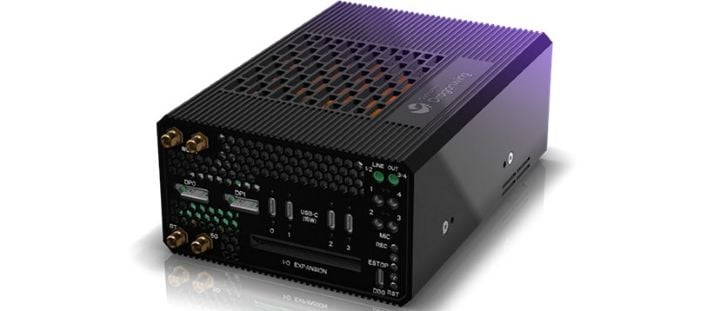
To handle precision motion control, the design boasts a robust collection of high-speed deterministic interfaces, including PCIe Gen5, Time-Sensitive Networking (TSN), 10Gbps Ethernet, and EtherCAT.
Furthermore, Qualcomm has hardened this platform against the unpredictable environments of industrial and outdoor deployments. The unit is housed in a fully enclosed case with forced-air cooling, while the RRD can operate in temperatures ranging from -40-158°F (-40-70°C) and includes built-in electrical over-voltage protection. Coupled with a layered software stack that supports ROS2 and cloud-connected fleet monitoring via the Qualcomm AI Hub, the platform reduces prototype-to-production cycles by months.
Early access for select customers begins this month, with global commercial availability scheduled for September.





