



OpenAI Blasts 'Careless' Apple Lawsuit In Fiery Public Response


To understand why this feud is exploding in public, you have to look at what triggered Apple's lawsuit in the first place. Last month, Apple sued OpenAI, the AI firm's recently acquired consumer hardware arm io Products, and two former Apple veterans: former iPhone engineer Chang Liu and former hardware VP Tang Tan. Apple's narrative was classic corporate cloak-and-dagger; the fruit company claimed departing engineers were raiding Apple's proprietary trade secrets and unreleased hardware designs to help OpenAI build a competing consumer AI device. Apple even asked a federal judge for a rapid preliminary injunction to freeze OpenAI in its tracks.
OpenAI's public response, posted yesterday and titled "Apple is getting this wrong," is a rare and calculated counter-punch designed to demolish Apple's reputation for meticulous perfection. First, OpenAI dismantles Apple's claim that it had tried to raise these alarms back in February only to be ignored. According to OpenAI, and later conceded in court filings, Apple's outside lawyers had actually emailed the wrong person after confusing two Asian surnames, accidentally replied to the wrong email thread, and even referenced a phone conversation with OpenAI's general counsel that turns out to have never happened.
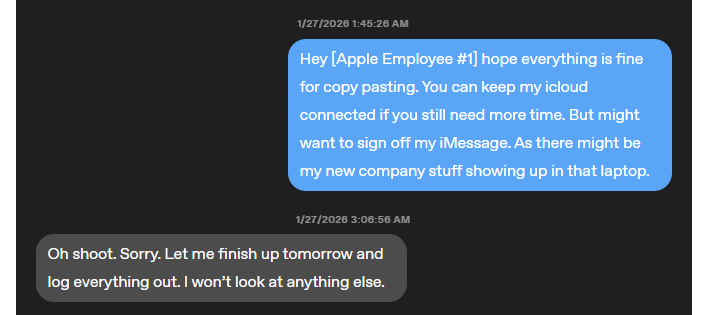
The embarrassment doesn't stop there; Apple's complaint made a major issue of Chang Liu allegedly accessing sensitive Apple documents on his iCloud after leaving the company. In response, OpenAI published raw iMessage transcripts showing that current Apple employees were actively texting Liu after his departure, asking him to look through his files to help them locate internal work documents. What Apple painted as a malicious trade-secret heist, OpenAI reframed as Apple's own messy IT housekeeping and a routine case of "residual access" where an ex-employee was simply trying to be helpful to his old teammates.
Unfortunately, a sharp blog post doesn't dismiss a federal lawsuit, and Apple has a vested interest in pursuing it no matter what, as OpenAI isn't just a chatbot company anymore. By acquiring Apple veteran Jony Ive's former design studio for $6.5 billion and poaching decades of Apple hardware leadership, OpenAI is marching directly into Apple's backyard, presumably to build next-generation consumer hardware. Whether Apple's initial injunction filing was sloppy or not, dragging OpenAI into federal court and demanding expedited depositions is a hell of a way to throw sand in the gears of a hardware rival before its first device ever sees the light of day.





