



Midjourney Aims To Build A Full Body Scanner To Create Digital Twins


It is an odd pivot for a software company, yet Midjourney treats it as a serious long-term bet. The scanner relies on ultrasound, sidestepping both the radiation of a CT machine and the strong magnetic fields of an MRI. A person steps onto a platform that lowers slowly into a shallow pool of water, descending about two inches per second through a ring that the company says will eventually hold half a million tiny sensors. The current prototype uses far fewer.
— Midjourney (@midjourney) June 18, 2026 Each sensor both transmits and listens. Midjourney says they work "like a dolphin, using its echolocation," firing sound waves into the body and reading the echoes that return. Because sound travels differently through fat, muscle, and bone, the array records those shifts at high speed and a compute cluster rebuilds them into images. The company claims the finished scan reaches sub-millimeter detail and could run nearly 100 times faster than an MRI, though no independent lab has verified that, and the working prototype currently takes around 20 minutes rather than a single minute.

What some may find peculiar is rather than installing these machines in clinics, the company wants them inside spas. The first Midjourney Spa is slated to open in San Francisco near the end of 2027, mixing saunas and cold plunges with rooms that quietly scan whoever soaks in them. The idea is disarmingly simple. People come to relax, and the imaging happens almost as an afterthought.
The roadmap moves fast. After a year of refining hardware and software, the spa opens, and by 2028 the company hopes to reach more cities on a third-generation scanner built with fully custom silicon. The long-range target calls for more than 50,000 scanners worldwide by 2031, enough for a billion scans a month.
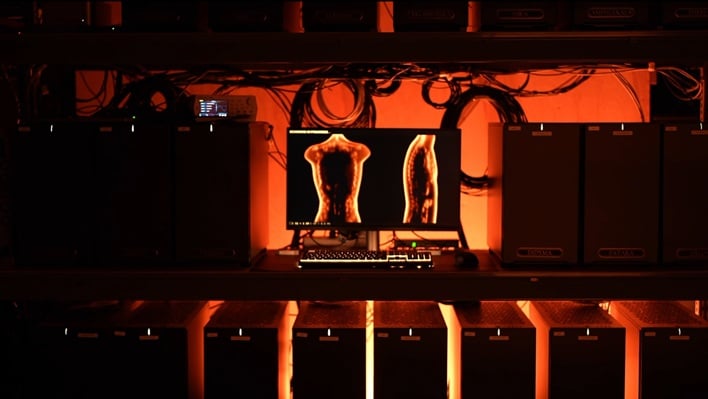
Plenty stands in the way, however. Diagnostic devices need FDA clearance, so Midjourney will launch with basic body-composition maps and feed results to regulators over time to expand what it can claim. The company also floats an eye-popping figure, suggesting that widespread early imaging might prevent 30% of deaths and cut healthcare costs in half. Nothing independent backs those numbers, and radiologists have already pushed back, noting that ultrasound struggles to see through bone, air, and deep tissue.
For now, Midjourney has a working prototype, a fistful of striking sample images, and no FDA approval to diagnose anything. It also answers to no outside investors, funding the effort as a research lab backed by its own users. A casual full-body scan in a minute is a genuinely exciting idea. Turning it into medical reality is another matter entirely.





