



Google Turns Thousands Of Pixel Phones Into A Low-Carbon Data Center


Nothing like some positive news to start out the week: In search for a solution to counter the massive carbon footprint of data centers, researchers at the University of California San Diego, with support from Google, are giving retired smartphones a second life as general-purpose cloud computing servers, rather than buying new expensive hardware.
To tap into this dormant potential, UCSD researchers stripped the retired phones of components that are either hazardous or useless in a data center context, e.g. the glass displays, cameras, chassis, and lithium-ion batteries. By leaving (and reusing) the motherboard and SoC alone, one is able to mitigate the environmental impact of producing brand new chips, as manufacturing these components accounts for roughly half of a smartphone's entire lifetime embodied carbon footprint.
Next, Android OS is replaced with a general-purpose Linux distro. This software update disables mobile-specific limitations, such as background application throttling, allowing the hardware to run at max performance. Because it takes between 25 and 50 smartphones to match the total compute throughput of a single dual-socket server, the team utilizes Kubernetes orchestration software to bind the individual motherboards into cohesive, self-managing clusters.
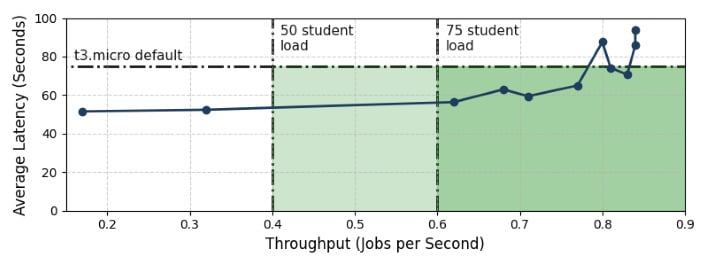
Building on this success, the university is preparing to launch a massive, 2,000-Pixel phone computing cluster. Expected to go live ahead of the upcoming academic year, this makeshift data center will be capable of supporting a hundred computer science courses simultaneously.
And sure, tech companies chasing massive AI models are unlikely to swap out specialized hardware for salvaged phone parts, but this recycling model proves that an incredibly cheap, highly sustainable alternative for educational institutions and smaller organizations is totally viable, reliable, and can help us sleep better at night.
Main image credit: Jan Antonin Kolar via Unsplash





