Forget Climate Change: Data Centers Are Raising Neighborhood Temps
by
Aaron Leong
—
Friday, May 22, 2026, 11:25 AM EDT
The rapid growth of data centers is driving localized artificial heat waves. A landmark study published in the Journal of Engineering for Sustainable Buildings and Cities has revealed that such facilities can raise ambient air temperatures in nearby neighborhoods by up to 4 degrees Fahrenheit (2 degrees Celsius), increasing the risks of urban heat islands.
In said study, researchers from Arizona State University investigated the thermal footprint of two large-scale operations in the tech hub cities of Mesa and Chandler, Arizona. The researchers attached high-precision, rapid-response air temperature sensors to vehicles, driving them through surrounding communities from June through October. By tracking real-time geographic and atmospheric conditions, the team discovered that data centers act as immense thermal engines. A single facility can generate more waste heat than the electrical consumption of 40,000 households combined.
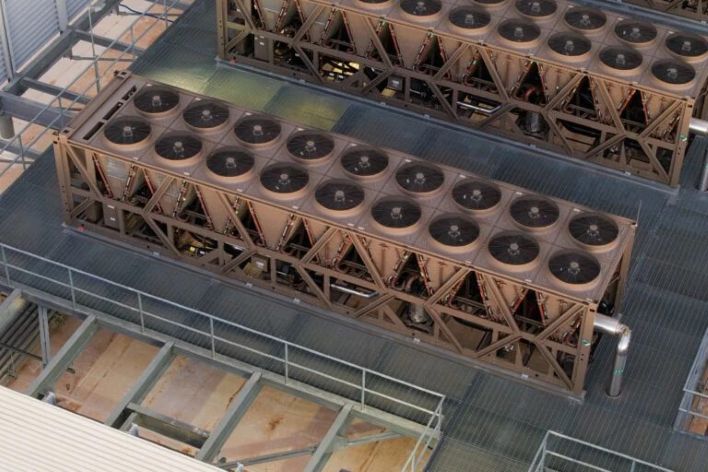
This localized warming stems from how these data centers stay cool, whereby they utilize expansive air-cooled condenser arrays that continuously exhaust plumes of hot air that can be 14° to 25° F warmer than the surrounding atmosphere. Prevailing winds then carry this thermal pollution beyond the facilities' property lines, creating a downstream heat wake extending up to a third of a mile into residential zones. Across the monitoring period, downwind areas experienced average temperature increases between 1.3° and 1.6° F, with peak anomalies hitting the 4-degree mark.
A cooling tower on top of a data center in Mesa, AZ (Credit: Rsparks3 via Wikimedia Commons)
Unwittingly, this artificial temperature increase also causes neighborhood residents to crank their home A/C units up. which then exhaust even more waste heat into the streets, while driving up overall electricity demand. This extra electricity consumption forces power grids to work harder, often increasing regional emissions and further straining energy infrastructure. For desert communities already grappling with severe public health risks from extreme weather, this localized effect could become a compounding feedback loop.
David Sailor, lead author of the study notes that these initial measurements likely represent a conservative estimate, too. The atmospheric footprint could vary drastically depending on seasonal weather shifts, and ongoing, non-peer-reviewed research suggests that under certain conditions, a data center’s heat island effect might ripple outward to a six-mile radius. As tech giants continue aggressively expanding infrastructure to meet the demands of artificial intelligence, cloud computing, and digital storage, the findings highlight an urgent need for urban planners to rethink zoning laws.
Main photo credit: Part of AWS's US-west-2 availability zone, showing three datacenters with a fourth under construction, by Tedder via Wikimedia Commons