



Court Slaps Attorney With Record Fine For Citing Hallucinated AI Cases


The case (initially reported by Oregon Live) centers around attorney Bill Ghiorso, who submitted a brief to the Oregon Court of Appeals containing 15 entirely fabricated case citations and nine fake quotes. No doubt, AI integration into professional workflows has promised efficiency, but in this case (as well as so many others) the tech failed big time and doubled down on errors, falsely ringing up what it believed was actual case law.
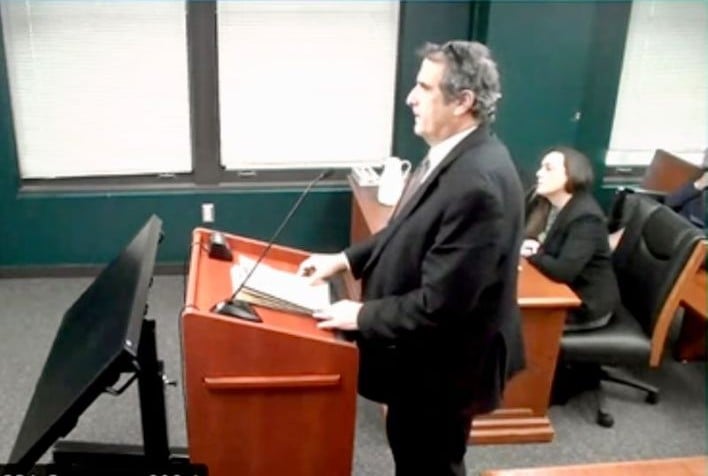
The court's frustration was compounded by the fact that the errors were not caught by the defense either. Patricia Rinco, an assistant Oregon attorney general, discovered the fake data seven months before the court’s oral arguments and reached out to Ghiorso to flag the issues. According to court records, Ghiorso did not respond to that initial warning. It was only when the appellate court formally questioned the citations during a November 2025 hearing that the gravity of the situation became unavoidable.
In his defense, Ghiorso blamed his paralegal for the errors and admitted that relying on an AI search engine to verify the data was a "fundamental error." The judges were unmoved by the attempt to shift blame, noting in their ruling that an attorney’s duties of professionalism, truthfulness, and candor to the court are non-delegable. They emphasized that simply asking a chatbot if it is lying is not a valid form of fact-checking, as generative AI tools are designed to predict language patterns rather than retrieve factual truths.
This ruling joins a growing body of national AI malpractice cases. Last month, a New Orleans panel ordered an attorney to pay $2,500 for similar fabrications, and another Oregon lawyer was fined $500 for a single fake citation. When will they ever learn?
Main photo credit: Oregon Justice Department





