



Clean Energy Chemical Breakthrough Turns Plastic Waste Into Potent Jet Fuel


The process addresses the selectivity problem that has long plagued plastic-to-fuel research. Currently, chemical recycling methods often produce a messy cocktail of chemical byproducts, making it difficult to refine them into high-performance jet fuel. By employing a specialized two-stage reactor, the Chinese research team managed to exert precise control over the molecular transformation.
In the first stage, the plastic waste is fed into a reactor operating at 460°C (860° F), where it is broken down into smaller, intermediate molecular compounds. The latter is then passed into a second reactor operating at 160°C (320° F). Here, they encounter a highly specific catalyst, i.e. atomically dispersed ruthenium sites supported on cobalt-aluminum oxide. During tests, this catalyst demonstrated hydrogenation performance more than 100 times greater than standard commercial ruthenium catalysts. The result is a cycloalkane-rich fuel that meets the rigorous energy-density requirements of modern jet engines.
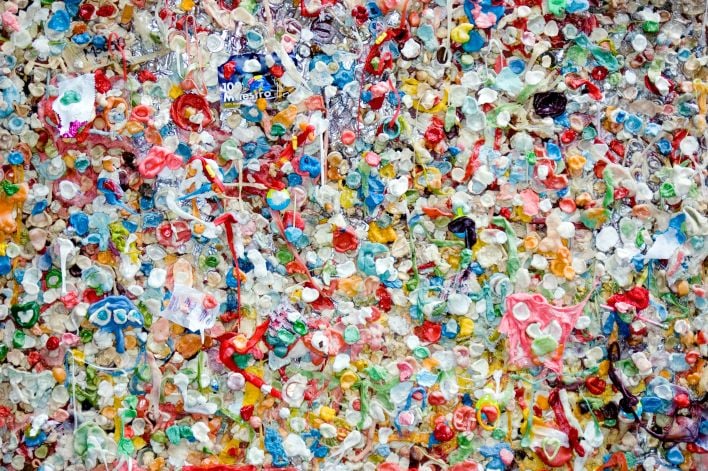
The breakthrough isn't just unique, but also economically viable. The researchers estimate the production cost of this recycled fuel at approximately $1.0 to $1.8 per kilogram. In comparison, conventional fossil-derived jet fuel typically fluctuates between $1.00 and $1.30 per kilogram depending on global market conditions and refinery output. Indeed, recycled fuel sits at the higher end of that range, but it remains remarkably competitive compared to other sustainable aviation fuel (SAF) alternatives, which often require expensive feedstocks like biomass or specialized oils.
The research team says that future development will focus on scaling
catalyst manufacturing and designing continuous feeding systems to
maintain high operational efficiency.
Aviation remains one of the most stubborn sectors to electrify because, the fact is, long-haul flights require the immense energy density of liquid hydrocarbons. If this plastic-to-kerosene tech can scale successfully from the current gram-scale lab tests to industrial-grade operations, it could transform the industry.
Main photo credit: Rephile Water via Unsplash





