



Android's New Emergency Live Video Feature Could Transform 911 Response


In an emergency, Android users can now share real-time visual details with 911 dispatchers, bridging a critical information gap that can hinder quick, effective emergency responses. Today Google rolls out Emergency Live Video across Android devices in three countries (running Android 8+), turning a smartphone on-site into a crucial pair of eyes for first responders before they even arrive on the scene.

Describing a complex, high-stress situation over the phone can obviously be challenging, sometimes leading to crucial details being missed or miscommunicated. Whether reporting a rapidly developing house fire, struggling to assess injuries at a car crash site, or trying to relay the coordinates of a downed tree blocking a road, verbal exchanges tend to slow down the process of sending the right aid.
This is where Google's Emergency Live Video comes into the picture (the pun wrote itself, honest). Dispatchers can now receive a secure, live video stream of the crisis, and thus by combining audio and visual information, precious seconds that can define a life-or-death outcome can be saved. For instance, a dispatcher viewing the severity of an accident might immediately send specialized rescue teams instead of standard EMTs, or if they see an individual collapsing, they can use the live video to guide the caller through performing life-saving steps like CPR until professional help arrives.
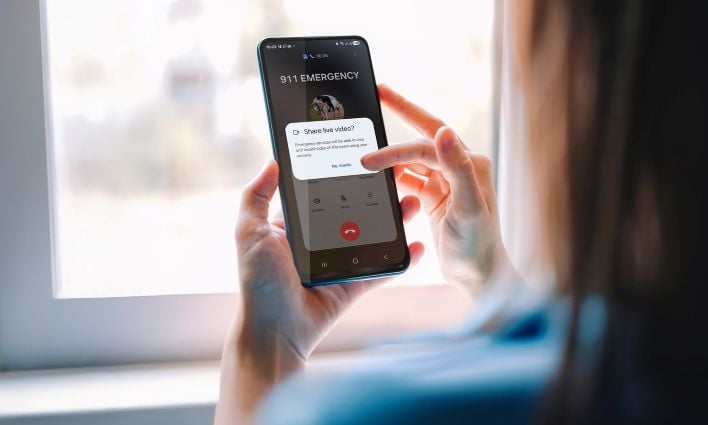
Initiating a live video call is not done by the user, but by the dispatcher. During an active emergency call or text, if the public safety official determines that visual evidence would be beneficial (plus only if it is safe for the caller), they send a request directly to the user's phone. A prompt appears on the screen, and the user can then choose to share their camera feed with a single tap. In terms of privacy and security, the video stream is encrypted by default, and the user maintains absolute control with the ability to stop sharing instantly at any point by simply tapping the screen again.
Emergency Live Video builds on Android's current suite of advanced detection capabilities like Car Crash and Fall Detection. As mentioned, the feature is compatible with Android phones running Android 8 and newer with Google Play services. The initial launch encompasses the US, and select regions of Germany and Mexico. Of course, another big factor to the success of Emergency Location Service is that public safety organizations need to be equipped with systems like Next Generation 911 (NG911) that enable video capabilities in the first place.





