


AMD Finally Fixes Frame Pacing In Its FSR 4 Frame Generation


AMD has been improving its various FSR 4 technologies across its past and present GPU architectures, which includes FSR 4 Frame Generation. Specifically, AMD is claiming improvements to frame pacing with FSR 4 Frame Generation enabled with the latest 4.0.2 version, when using AMD's latest Radeon graphics drivers.
For those that may be unfamiliar with the term, frame pacing corresponds to how consistently frames (typically from a game) are delivered to a display. A game running at 60 FPS, for example, may consistently deliver about 60 frames per second or the framerate could fluctuate wildly between 118 and 2 FPS, for about the same average. Cases like the latter, where the framerate fluctuates significantly, have poor frame pacing, which results in stuttering, variable latency and other issues that deter from the user experience. Consistent frame pacing, with a high-enough average framerate, however, will result in smooth animations and a better overall experience.
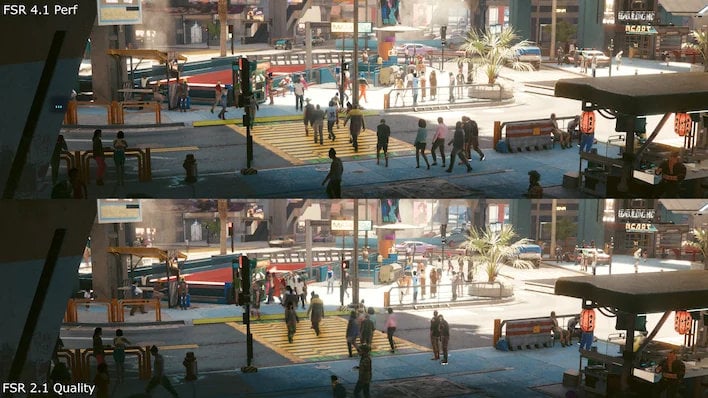
We recently tested AMD's latest FSR 4.1 on the Radeon RX 6000 series, which includes support for older GPU architectures, and focused mostly on image quality and frame rates. But tucked away in the release notes for AMD's latest drivers, a fix for frame pacing when using frame generation was also mentioned, which has been a point of contention for many gamers for quite some time. We didn't measure frame pacing this time around, but the folks at Hardware Unboxed did, and they found some interesting things.
In many instances, frame pacing when using FSR Frame Generation is improved, but it's not universally the case and some games actully behave differently depending on the GPU architecture and RDNA 3 shows more significantly improvements than RDNA 4.
For more details on how AMD's latest drivers affect frame pacing across an array of video cards and RDNA graphics architectures, check out the video above. It features an exhaustive set of frame time benches using multiple games, GPUs and driver versions. And remember: a consistent frame rate is almost always better than an ever-fluctuating one.