



2007 Nokia N95 Surprisingly Runs Half-Life At A Playable 30 FPS


Argentine developer Dante Leoncini has successfully ported Valve’s Half-Life (the 1998 OG version) to run on a now-ancient 2007 Nokia N95 smartphone. Even more impressive, the port manages to hit a stable 30 frames per second complete with Bluetooth keyboard and mouse support to boot.
Half-Life 1 on the Nokia N95 finally reached 30 FPS! Some slowdowns remain, but I've already identified the cause and am working on a fix. Mouse and keyboard support has also been added. Still a few bugs to fix, but it's getting there.#HalfLife #nokia #symbian #valve #steam pic.twitter.com/PDlq2CRxAy
— Dante D. Leoncini (@dante_leoncini) June 5, 2026
Leoncini shared clips of the project showcasing the game running on the phone's 240x320 resolution screen. Getting this to even boot on the N95's humble hardware running the defunct Symbian OS deserves props alone, let alone to run smoothly. Rather than some kind of emulation, Leoncini built a native Symbian-compatible version of the game using an open-source engine, likely a variation of Xash3D (as spotted by Videocardz.com)
Now, the N95 was a high-end powerhouse when it debuted, sporting a dual-core 332MHz Texas Instruments CPU, a PowerVR MBX 3D graphics accelerator, and up to 128MB of RAM on its 8GB storage variant. On paper, these specs comfortably exceed the 1998 PC hardware requirements for the game, which initially required a 133MHz Pentium processor and 24MB RAM. (Side note: Seeing a smartphone match the performance of a late-90s desktop PC reveals how rapidly mobile computing advanced during that decade.)
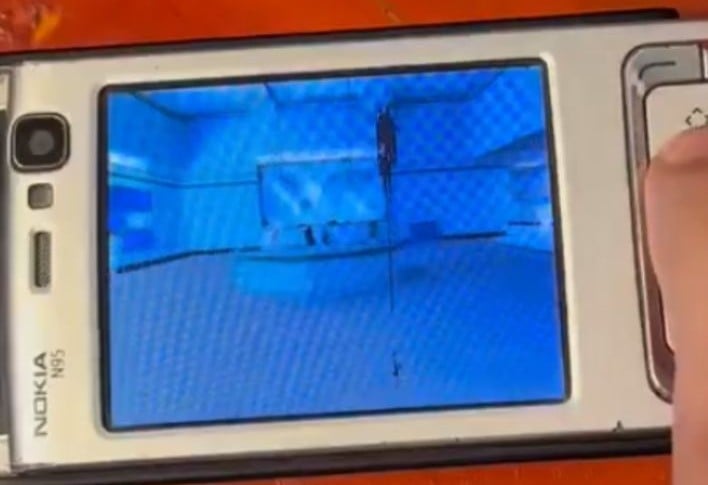
To make the experience feel authentic to its PC roots, Leoncini also implemented full Bluetooth mouse and keyboard support. While utilizing the phone's older Bluetooth 2.0 standard introduces a small amount of latency, players can technically play through the shooter without fumbling with the handset’s integrated physical controls.
According to Leoncini, he was able to resolve early graphical glitches and even added features like weapon selection and dedicated server creation. He is currently working on a localized network function, raising the bizarre but exciting possibility of a multiplayer LAN party made up entirely of 19-year-old slider phones.
Though some minor performance dips and bugs still plague the port during intensive combat sequences, Leoncini has already identified the underlying architectural bottlenecks and is actively developing optimizations to smooth out the frame rate. For those feeling nostalgic or have been looking for a reason to break out their dusty old N95, the developer has made the engine files and custom installation guides available on his GitHub.





