


A 1.6-Mile Asteroid Is Spotted Spinning So Fast It Challenges What We Know


Astronomers using fresh data from the Vera C. Rubin Observatory have uncovered an asteroid that defies usual planetary physics, spinning at a speed so fast it should technically be tearing itself apart, but isn't.
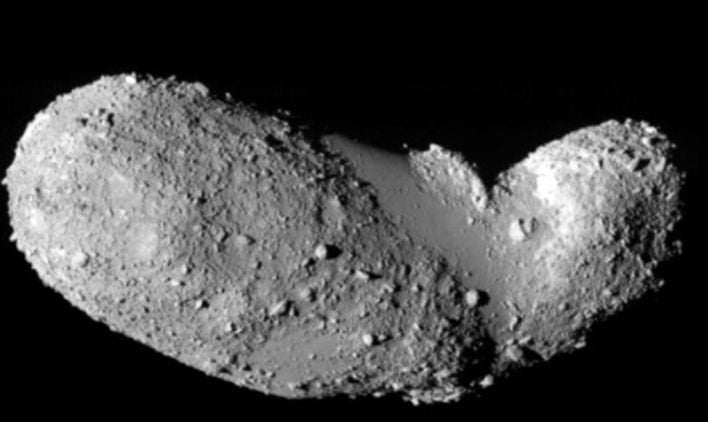
However, a newly analyzed asteroid (ID 491384) is shattering (pun intended) those assumptions by becoming the largest ultra-fast-spinning asteroid ever detected by science. Stretching 2.53 kilometers (1.57 miles) across, this rock completes a full rotation in a mere 4.18 minutes, which equates to a spin more than 31 times faster than the aforementioned spin barrier for objects of its size. For a body extending over two kilometers across to endure such extreme rotational forces without disintegrating, it must possess substantial internal cohesive strength, pointing toward a solid, monolithic interior instead.

This unique discovery emerged from an analysis of light curve data collected by the Vera C. Rubin Observatory in Chile, as detailed in research led by University of Washington astronomer Dmitrii Vavilov and posted on arXiv earlier last week.
As irregular asteroids rotate through space, they reflect varying amounts of sunlight toward Earth, creating light curves that allow scientists to calculate their rotation speeds. Because survey telescopes take snapshot observations with time gaps in between, rapidly spinning objects can create misleading optical patterns. To solve this, Vavilov's team designed bespoke statistical software capable of filtering out observation gaps and evaluating the true probability of rapid spin rates.
Applying this approach to a large dataset of 9,417 asteroids monitored by Rubin, the software successfully identified 66 super-fast-rotator candidates, with asteroid 491384 and 566130 standing out as the crown jewels of the bunch.