



Uber's Self-Driving Volvos Use Fewer LIDAR Sensors Contributing To Reduced Overall Safety: Report


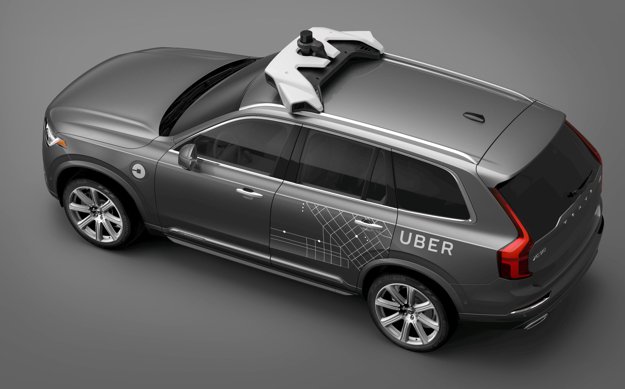
Now, a new report from Reuters suggests that Uber's decision to skimp on the number of safety sensors that continuously scan ahead, to the side, and rear of the vehicle to gauge its surroundings may have contributed to the accident. According to interviews that the publication conducted with former employees, Uber's first self-driving cars -- based on the Ford Fusion -- have seven onboard LIDAR sensors. One spinning 360-degree unit was mounted on the roof, while there were six additional LIDAR sensors embedded in the front bumper.
The reduction in the number of sensors may have been more economical for Uber, but the change also reduced safety. "In scaling back to a single LIDAR on the Volvo, Uber introduced a blind zone around the perimeter of the SUV that cannot fully detect pedestrians, according to interviews with former employees and Raj Rajkumar, the head of Carnegie Mellon University’s transportation center who has been working on self-driving technology for over a decade," Reuters alleges.
For comparison, fierce rival Waymo uses six LIDAR sensors on its self-driving Chrysler Pacifica Hybrid minivans. In addition to fewer LIDAR sensors, the Uber Volvo XC90s also have fewer cameras than Uber's Ford Fusions, which are being phased out. The XC90 has seven cameras keeping tabs on world events while the Fusion has 20. The XC90 does, however, have more radar sensor (ten versus seven).
“We believe that technology has the power to make transportation safer than ever before and recognize our responsibility to contribute to safety in our communities," said a representative for Uber in a statement. "As we develop self-driving technology, safety is our primary concern every step of the way.”
Given its beefier LIDAR armament, Waymo remains adamant that its vehicles would have not crashed into a pedestrian under similar conditions. “At Waymo, we have a lot of confidence that our technology would be able to handle a situation like that," said Waymo CEO John Krafcik.




