


Sony Patent Could Let Deaf Gamers See In-Game Sounds In Real Time


Often, we take for granted how much sound design means to gamers—it's used to establish atmosphere, build tension, and provide crucial gameplay warnings. For players with hearing impairments, not having these auditory cues undoubtedly impacts both immersion and competitive performance. Subtitles can only do so much to capture spoken dialogue, but they fail to convey spatial awareness, ambient tones, or emotional weight. Sony's patent addresses this gap with a method that analyzes audio assets before they are played and converts them into visual indicators.
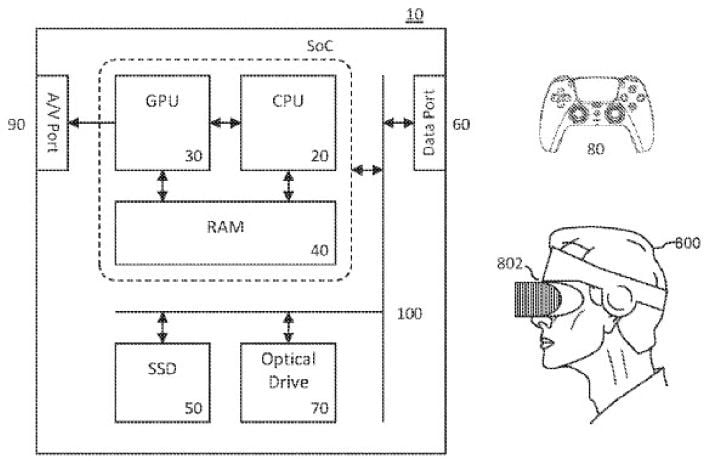
According to the documentation, the proposed system is like a version 2.0 above traditional closed captions by classifying the intended psychological or environmental effect of a sound. Rather than displaying just text, the software can categorize whether an audio track is meant to evoke fear, build narrative suspense, warn of danger, or merely texture the environment. It then generates corresponding on-screen representations, which can range from abstract shapes and icons to stylized onomatopoeic words like a sudden "Roar!" appearing when a monster closes in. Furthermore, properties like color intensity, brightness, and transparency are linked to the audio’s volume profile and character, allowing players to gauge how loud or close a sound source is.

One of the interesting nuggets detailed in the application is its potential compatibility with legacy software. The system's architecture suggests that an operating-level helper application or system-level software could theoretically parse and tag sound files from older, pre-existing games automatically.
For what it's worth, most patents never make it to a finished product, and as you may be aware, Sony is a pretty prolific submitter of patent applications. Here's hoping this one comes to fruition, perhaps by the time the PlayStation 6 arrives.