AMD Vows To Bring FSR 4 To Gaming Handhelds And Laptops By Year-End
by
Chris Harper
—
Thursday, October 08, 2026, 02:55 PM EDT
The AMD Z2 Extreme-powered ROG Xbox Ally X. Image: HotHardware
In an official statement from AMD's Computing and Graphics VP Jack Huynh, the company confirms plans to expand FSR 4 upscaling support across its APUs, which includes chips powering many PC gaming handhelds and laptops, by the end of the year. Beyond simply supporting the underlying GPU architecture and forcing FSR 4 support through FSR 3 paths like OptiScaler does, AMD plans to create a lighter FSR 4 model specifically for APUs and lower-power SoCs. This may wind up working similarly to the "tiny DLSS" we see in some Nintendo Switch 2 games, and could enable similarly impressive results on a low power budget.
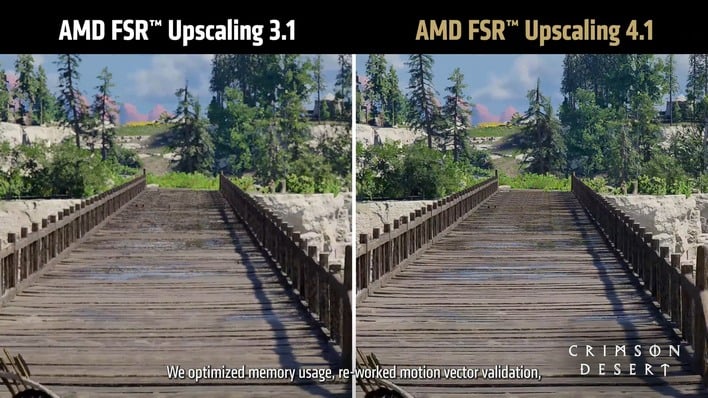
AMD FSR 3.1 vs 4.1 in Crimson Desert. Image: AMD
Beyond official AMD FSR 4 support extending across older AMD architectures, which we mostly already knew was happening, details also suggest the likelihood of RDNA 4-equipped APUs with native ML-based AMD FSR 4 support are coming. AMD's comments aren't presented in full by the original source, The Elec, but would line up with the rumor mill, including leaks of what may be the Steam Deck 2's SoC.
The enhanced image quality and Frame Generation capabilities offered by AMD FSR 4 could improve the value proposition and longevity of existing handhelds, especially if the lite version of FSR 4 includes support for RDNA 2 handhelds like the Steam Deck or original ROG Ally.
Unfortunately, "across our product lineup" is a little broad, so we can't be sure how far AMD's FSR 4 backporting plans extend for laptops and handhelds. The previous timeline on official RDNA 2 FSR 4 support for discrete GPUs like the Radeon RX 6000 Series was "early 2027," though.
Christopher Harper is a tech writer with over a decade of experience writing how-tos and news. Off work, he stays sharp with gym time & stylish action games.
TOP STORIES
Which New GPU Is For You?
KEEP INFORMED
Stay updated with the latest news and updates. Subscribe to our newsletter!