|
|
| Introduction and Related Information | ||||||
|
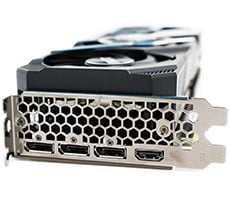
Today's announcement by NVIDIA should come as no surprise to PC enthusiasts. The company's modus operandi has been to launch a new flagship GPU and over the course of the next year or so scale back the design to flesh out a complete top-to-bottom line-up of products, all with essentially the same feature set. We saw this scenario play out with the GeForce 6 series, which began with the high-end GeForce 6800 Ultra and ended with the GeForce 6100 series IGPs. The GeForce 7 series too began its life with the GeForce 7800 GTX and is now comprised of a whole host of products at various price points, many of which will soon be overshadowed by their GeForce 8 series couterparts. "What GeForce 8 series counterparts?", you ask. Well, that's what we're here to talk about. NVIDIA is announcing a handful of products today, ranging from the new mid-range GeForce 8600 GTS and GT to the OEM-only GeForce 8300 GS. As you probably expect, these new cards sport the same base feature set as NVIDIA's current flagship DX10-class GeForce 8800 GTX and differ mainly in the level of performance they're able to deliver. NVIDIA does have a couple of tricks up their collective sleeves with this launch as well, like a new, more powerful PureVideo HD engine, which we'll also tell you about on the page ahead.
We've already covered the architectural features and benefits of the NVIDIA GeForce 8 Series GPUs in previous articles, so we won't go into detail again here. To familiarize yourself with the features inherent to NVIDIA's GeForce 8x00 series cards, nForce chipsets, and their multi-GPU platform as whole, please take some time to peruse the articles listed below: The details and performance data in the articles listed above will give you much of the background information necessary to better understand the new 8600 series graphics cards we'll be showcasing here today. If you're unclear about anything on the proceeding pages, please look back to these articles for a multitude of background data related to today's subject matter. |
| DX10 Screen Shots and IQ | ||
|
When we covered the inital launch of the GeForce 8800 series , we detailed the new image quality-related features inherent in the Lumenex engine, so we won't go into detail again here. We did, however, run a couple of preliminary tests to ensure the GeForce 8600 was producing the same kind of images as the GeForce 8800.
In all of the few games we tested, the new GeForce 8600 cards produced images that were idential to those of a GeForce 8800. The screenshots above, taken with Futuremark's 3DMark06, illustrate that point. The two images are idential right down to every pixel. And although DirectX 10 games that can exploit NVIDIA's GeForce 8 series hardware haven't arrived just yet, we wanted to present some eye candy from a couple of upcoming titles to demonstrate what the API is capable of. The screenshots above are from CryTek's upcoming shooter Crysis and Massive Entertainmant's World In Conflict. Flipping through the images avbove is sure to enduce some jaw-dropping. Of course, we can't vouch for the GeForce 8600's performance in these titles, because they aren't ready yet. But, the DX10 features offerf by the 8600's GPU mean it'll be able to render these future titles as the developers intended. |
| PureVideo HD Updates | ||||
|
In the earyly part of this article, we mentioned that NVIDIA has updated the PureVideo HD video engine integrated into the GeForce 8600 / 8500 GPUs and have incorporated a few new features specifically designed to enhance playback of cutting edge HD content. The name of the engine remains PureVideo HD, however, the GeForce 8600 is capable of even more than the GeForce 8800 in regard to HD video playback.
This high-level overview shows that the GeForce 8600 and GeForce 8500 GPUs are equipped with a second generation PureVideo HD video processor and a new BSP engine. BSP in this instance stands for "Bitstream Processor". Not pictured in this diagram is another new addition dubbed the AES128 engine. As its name imples, the AES128 engine handles on-board hardware decryption of HD movie content. The combination of the the second generation PureVideo HD and BSP / AES128 engines means the new architecture can handle 100% of the CABAC and H.264 video decoding necessary to provide full specifcation playback of Blu-Ray and HD DVD content, without straining the resources of the host CPU. The second gen PureVideo HD engine handles CPU offloading of IDCT, and motion compensation and deblocking fucntions of for MPEG-2, VC-1, and H.262 playback. The BSP Engine handles H.264 CABAC (Context Adaptive Binary Arithmetic Coding) and CAVLC (Context Adaptive Variable Length Coding) reverse entropy decoding, and the AES128 engine takes care of decryption. |
| Our Test Systems and Video Performance | ||||||||||||||||
|
HOW WE CONFIGURED THE TEST SYSTEMS: We tested all of the graphics cards used in this article on either an EVGA nForce 680i SLI motherboard (NVIDIA GPUs) or an Intel D975XBX2 board (ATI GPUs) powered by a Core 2 Extreme X6800 dual-core processor and 2GB of low-latency Corsair RAM. The first thing we did when configuring the test system was enter the BIOS and set all values to their default settings. Then we manually configured the memory timings and disabled any integrated peripherals that wouldn't be put to use. The hard drive was then formatted, and Windows XP Pro with SP2 and the April '07 DX9 update was installed. When the installation was complete, we then installed the latest chipset drivers available, installed all of the other drivers necessary for the rest of our components, and removed Windows Messenger from the system. Auto-Updating and System Restore were also disabled, the hard drive was defragmented, and a 1024MB permanent page file was created on the same partition as the Windows installation. Lastly, we set Windows XP's Visual Effects to "best performance," installed all of the benchmarking software, and ran the tests.
For our first round of tests we took a look at Digital Video processing performance between the two competing core GPU architectures. "PureVideo HD" technology is at work here for NVIDIA and "AVIVO" for ATI.
To illustrate CPU utilization when playing back WMV HD content, we used the Performance Monitor built into Windows XP. Using the data provided by Windows Performance Monitor, we created a log file that sampled the percent of CPU utilization every second, while playing back the 1080p version of the "Amazing Caves" video available for download on Microsoft's WMVHD site. The CPU utilization data was then imported into Excel to create the graph below. The graph shows the CPU utilization for a GeForce 8600 GTS and a Radeon X1950 Pro using Windows Media Player 10.
Both of the cards produced a "spikey" graph here, but the peaks and valleys produced by the GeForce 8600 GTS weren't quite as pronouced, which resulted in slightly lower CPU utilization in comparison to the Radeon X1950 Pro.
Next up, we have the HQV DVD video benchmark from Silicon Optics. HQV is comprised of a sampling of SD video clips and test patterns that have been specifically designed to evaluate a variety of interlaced video signal processing tasks, including decoding, de-interlacing, motion correction, noise reduction, film cadence detection, and detail enhancement. As each clip is played, the viewer is required to "score" the image based on a predetermined set of criteria. The numbers listed below are the sum of the scores for each section. We played the HQV DVD using the latest version of Intervideo's WinDVD 8, with hardware acceleration and PureVideo extensions enabled.
Both NVIDIA and ATI have made great strides in regards to standard DVD movie playback, to the point where they have almost rendered the HQV benchmark useless. The new GeForce 8600 GTS comes within 2 points of a perfect score in HQV, with the ATI solution not too far behind. |
| 3DMark06 Performance | ||||||
|
We've got a lot of numbers to digest from this point forward. We've included benchmark scores from stock and pre-overclocked GeForce 8600 GTS and GT cards, in addition to similarly priced last-gen products, and current higher-end parts. We've also got some multi-GPU SLI and CrossFire numbers to consider. As you can see, the new GeForces perfomed well in the 3DMark06 benchmark. The GTS cards outpaced all of the last-gen products with the GT finishing up just behind them. The more expensive X1950 XTX and 8800 GTS cards took the top spots thanks to their higher fullrates, large frame buffers, and incrased memory bandwidth.
If we tunnel a bit deeper and look at the individual shader model 2.0 and HDR / shader model 3.0 benchmarks, we see a similar breakdown. The new GeForce 8600 GTS in both single and dual-card SLI configurations are able to outpace the similarly priced last-gen 7950 GT and Radeon X1950 Pro. |
| Half Life 2: Episode 1 Performance | ||||||
|
Our custom Half Life 2: Episode 1 benchmark proved to be a bit of a stumbling clock for the GeForce 8600 GTS and GT cards. In this test, the cards put up playable framerates at 1280x1024 with AA and aniso enabled, but performance fell off quite a bit at the higher resolution. Overall, they were outpaced by all of the competition in this game, including the GeForce 7950 GT and the Radeon X1950 Pro. |
| F.E.A.R. Performance | ||||||
|
The new GeForce 8600 GTS and GT put up some decent numbers in F.E.A.R. at a resolution of 1280x1024, but with the resolution cranked up to 1600x1200, the fastest of the 8600 GTS cards just hit the 30 FPS mark. Once again, the last-gen GeForce 7950 GT and Radeon X1950 Pro put up the better scores in the singel card configurations. Running a pair of GTS cards in an SLI configuration, however, resulted in a much better score than Radeon X1950 Pro CrossFire at the lower res, but the Radeons pulled ahead once again at 1600x1200. |
| Quake 4 Performance | ||||||
|
Our custom Quake 4 benchmark reported more of the same. The new GeForce 8600 series cards put up perfectly playable framerates at both resolutions with anti-aliasing and anisotropic filtering enabled, but their performance was overshadowed by the last-generation parts. |
| Prey Performance | ||||||
|
The results reported by our custom Prey benchmark look much like those from Quake 4 on the previous page, which is to be expexted considering they share the same game engine. in comparison to the Radeon X1950 Pro, the new GeForce 8600 GTS cards fare a bit better, but yet again they are outperformed by the older hardware. |
| S.T.A.L.K.E.R. Performance | ||||||
|
The new GeForce 8600 GTS and GT cards' performance as they relate to the GeForce 7950 GT and Radeon X1950 Pro are better in S.T.A.L.K.E.R. than in the previous titles we tested, but none of the mainstream cards put up very fluid framerates here. We need to reiterate that we tested this game at its most taxing settings, however. With reduced image quality settings the game would no doubt perform better. We would also like to point out the performance scaling of the 8600 GTS SLI configuration versus the CrossFire rigs. Enabling CrossFire actually reduced performance, whereas enabling SLI caused significant performance icnreases. We suspect SLI performance scaling will be better in future driver releases with this game though, based on converstations we had with representatives from NVIDIA. ATI's driver team will likely be doing some tweaking as well. |
| Power Consumption and Noise | ||||
|
We have a few final data points to cover before bringing this article to a close. Throughout all of our benchmarking, we monitored how much power our test system was consuming using a power meter and also took some notes regarding its noise output. Our goal was to give you all an idea as to how much power each configuration used and to explain how loud the configurations were under load. Please keep in mind that we were testing total system power consumption here, not just the power being drawn by the video cards alone.
Whether sitting at idle or being taxed by a heavy graphics workload, the new GeForce 8600 series cards has the lower power consumption of the bunch. The GeForce 7950 GT was in-line with the pre-overclocked GTS cards, but the GTs put up numbers well below the rest here. The Radeon X1950 Pro wasn't all that much more power hungry but under load there was a 10-20+ watt delta separating it from NVIDIA's new mainstream offerings. We'd also like to talk a little about the noise generated by the new slim-line, single slot coolers on the GeForce 8600 cards. For the most part, the fans on the coolers spun at a low speed, and were barely audible over our test system's PSU, CPU heatsink, and case fans. After some extended benchmarking sessions though, the fans did spin-up to a higher RPM and they produced a noticable report. We wouldn't call the fans loud by any means, but they were clearly audible. |
| Our Summary and Conclusion | ||||
|
Performance Summary: NVIDIA's new GeForce 8600 GTS and GT cards put up decent performance numbers throughout our suite of benchmarks, but they were outpaced in a number of situations by the Radeon X1950 Pro and GeForce 7950 GT. In 3DMark06 and S.T.A.L.K.E.R. the 8600s performed on-par or better than the last-gen cards we tested. However, in virtually all of the other tests the new GeForce 8600 GTS and GT cards fell short of the mark set by its older mainstream counterparts.
The new GeForce 8600 GTS and GeForce 8600 GT cards are a bit of a mixed bag. On one hand, they offer all of the cutting edge features of the GeForce 8800 series, and then some. These new cards offer full support for DirectX 10, CSAA, high-quality anisotropic filtering, and they feature an enhanced PureVideo HD engine that puts them a step ahead of even the GeForce 8800. The GeForce 8600 GTS and GT will also hit the market before any competitive DX10 offereings from ATI, they run relatively cool and quiet, and their power consumption numbers are lower than current mainstream graphics cards. On the other hand, the GeForce 8600 GTS and GT don't perform on the same level as last-generation's GeForce 7950 GT and Radeon X1950 Pro, despite the similar price points currently. We should also note that the $220+ price tags of pre-overclocked GeForce 8600 GTS cards is within striking distance of the significantly more powerful GeForce 8800 GTS 320MB, which could be had for about $250-$279 at the moment. Given their in-game performance and streamlined design, we suspect prices on GeForce 8600 GTS and GT cards will come down quite a bit in the coming weeks. Performance will likely be increased over time with more driver tuning as well, which will further enhance the product's value. As it stands today, however, its difficult to recommend the GeForce 8600 GTS or GT to gamers in light of their gaming performance alone, unless that is DX10 support is on your short list of requirements and these cards fit your budget. For home theature enthusiasts though, the GeForce 8600 GTS is arguably the video card to own. It's got the most advnaced video engine current available and at a price that won't break the bank. You can expect GeForce 8600 GTS card to be available almost immediately, with the 8600 GT and 8500 GT following over the course of the next few weeks.
|