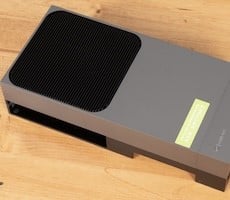
Two perpetually, almost fad-like and recurring themes for computing technology in 2008 are low power, environmentally friendly products as well as tiny, small form-factor or ultra-portable machines. Power consumption and size -- it has become undeniably hip and cool to offer products that cater to the new carbon footprint and mechanical footprint-minded consumer. If you didn't know better, it almost seems like the introduction of Asus' Eee PC started the craze back in Q4 of '07 but clearly, at least small form-factor system have been around for many years.
Some of you will remember Shuttle's line of wildly popular barebones XPCs which became an underground hit with many in the DYI crowd looking to build Home Theater setups or fully capable and portable LAN boxes. Shuttle hit the scenes with this system over six years ago, if you can believe that, and they've been growing in popularity ever since with the recent small form-factor/eco-friendly frenzy breathing even more life into the market niche'. And you know SFF (small form-factor) systems have arrived when the "big guns" like Dell set their sights on this competitive arena.
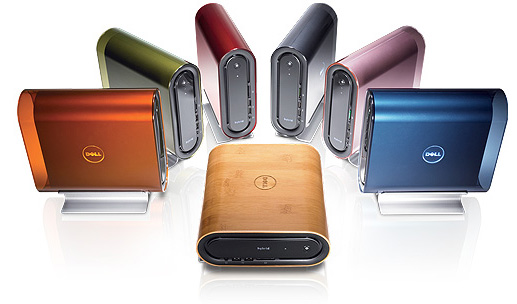
Dell's marketing team had their collective thinking caps on for the brand naming of their new line of Studio Hybrid SFF desktops. While the machine is comprised of traditional electronics and is powered by standard AC current, the term "Hybrid" conjures up efficiencies in power consumption along with perhaps a physical profile that slices cleanly through the air. Shipped with an included "recycling kit" that allows you to ship, free of charge, your old, run-down system back to Dell for proper disposal, the new Dell Studio Hybrid takes to the HotHardware test bench today for our technical evaluation. Make sure you check out our HH Video Spotlight on the machine as well but read on here for the full Monty.

| |
| Dell Studio Hybrid 140G |
| Specifications and Features | |
| Processor Choices: |
|
Intel® Pentium™ Dual Core T2390 (1.86GHz/533Mhz FSB/1MB cache)
Intel® Core™ 2 Duo T5750 (2.00GHz/667Mhz FSB/2MB cache)
Intel® Core™ 2 Duo T5850 (2.16GHz/667Mhz FSB/2MB cache)
Intel® Core™ 2 Duo T8100 (2.1GHz/800Mhz FSB/3MB cache)
Intel® Core™ 2 Duo T9300 (2.5GHz/800Mhz FSB/6MB cache)
Intel® Core™ 2 Duo T9500 (2.6GHz/800Mhz FSB/6MB cache) | |
| Operating System |
|
Genuine Windows Vista® Home Basic
Genuine Windows Vista® Home Premium
Genuine Windows Vista® Ultimate | |
| Memory |
|
Up to 4GB 667MHz Dual Channel DDR2 SDRAM
| |
| Hard Drives |
|
Up to 320GB3 Serial ATA Hard Drive (5400 RPM)
External Connections
Additional drives can connect to IEEE1394 and/or USB 2.0 port
| |
| Optical Drives |
|
Slot load optical drive
Slot Load CD / DVD Writer (Dual Layer DVD+/-RW Drive)
Slot Load Blu-ray Disc Combo (DVD+/-RW & BD-ROM) (includes Blu-ray accelerator card) | |
| Graphics |
Intel® Integrated Graphics Media Accelerator X3100 | |
| Audio |
|
Intel High Definition Audio 2.0
Optional Integrated Sound Blaster Audigy Advanced HD Software Edition | |
| Wireless |
|
Integrated
10/100/1000 (Gigabit) Ethernet LAN on system board
Wi-Fi Options
Built-in Draft-N Wireless Networking (Optional) | |
| Externally Accessible Ports |
|
Five USB 2.0 compliant ports
IEEE1394a port (4-pin)
HDMI video connector
DVI video connector
Integrated network connector 10/100/1000 LAN (RJ45)
AC adapter connector
Digital Audio: S/P DIF Out
Analog Audio: Headphone (front); Line-in / Line-out (back)
7-in-1 Media Reader:
Secure Digital (SD) Memory Card
Multi-Media Card (MMC)
Memory Stick
Memory Stick PRO
xD-Picture Card
Hi Speed-SD
Hi Density - SD | |
| Dimensions & Weight |
| |
Vertical |
Horizontal |
No Stand, System Only |
| Tall |
8.8" |
3.9" |
2.8" |
| Wide |
3.0" |
7.9" |
7.7" |
| Deep |
8.3" |
8.3" |
8.3" | |
We'll get into specific design details of the Studio Hybrid next but the detailed spec list above shows you the base configuration of the machine. All systems start with at least 2GB of DDR2-667 system memory, a standard 5400RPM SATA hard drive, onboard integrated Intel graphics, integrated Gigabit Ethernet and HD Audio. The system weighs in at less than 5 lbs and comes standard with a slot load DVD player with Blu-ray as an upgrade option. With its tiny 8" x 8" size, Dell decided to use an entirely mobile chipset design and Intel's Core 2 Duo T series of notebook chips powers this machine.