|
|
| Introduction |
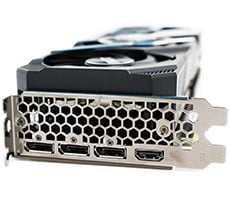
Early in 2008, NVIDIA released the QuadroFX 3700 board priced at the more cost-conscious (only $1,700) high-end workstation market. Using the less powerful, but more efficient G92 architecture, it delivered raw GPU performance close to that of the QuadroFX 5600, but had only 512 MB of memory and overall lukewarm specs given the price tag. Nevertheless, NVIDIA still held the performance crown with the QuadroFX 5600, and all was well in the workstation realm. Now, as we've seen in the labs, ATI is assaulting that performance crown with their new FirePro lineup of workstation graphics cards. The top-tier FirePro V8700 model which we looked at a few weeks back uses ATI's exciting new RV770 graphics processor and was able to wallop the QuadroFX 5600 board in terms of performance while also being a lot less expensive. Of course, NVIDIA is right there with a solution of their own to compete against the newly rejuvenated FirePro lineup, but the question is, are NVIDIA's new models enough to stave off a newly energized ATI? Two new models just hit the QuadroFX lineup. On the high-end, they have the QuadroFX 5800 card, using the same powerful GT200 architecture which powers the GeForce GTX 280, coupled together with 4 GB of memory and a 512-bit memory interface. Of course, this beast costs $3,499, and it's going to be a tough sell in this economic market, powerful as it may be. Perhaps the more reasonable solution is the card we're looking at today, the QuadroFX 4800, the QuadroFX 5800's little brother. The QuadroFX 4800 is a much more palatable high-end solution, coupling together a GT200 graphics processor with 1.5 GB of memory and a price tag nearly half that of the QuadroFX 5800. Let's find out how NVIDIA's massive GT200 graphics processor handles workstation-class loads instead of crunching pixels in Crysis... NVIDIA QuadroFX 4800 1.5 GB Workstation Graphics Card
|
| Specifications and Comparison | |||
Specifications Before we look at this card specifically, we wanted to run through some of the specification and compare them to the newly launched FirePro V8700 card as long with its bigger brother, the QuadroFX 5800.
For those who cannot tell by looking at the specification differences between the QuadroFX 4800 and QuadroFX 5800, what we're basically dealing with here are the Quadro versions of the GeForce GTX 260 and 280 series, somewhat beefed up for the workstation market. These variants are equipped with huge frame buffers, native DisplayPort options, Stereo output support, and support for Genlock/Framelock. ATI's FirePro V8700 follows that same strategy, using their RV770 GPU used in the Radeon HD4870 series and re-equipping it for the pro market. While the "upgrades" to the GeForce GTX 260 design to make the move over to the Quadro series are certainly positive all across the board, there is one thing to note. The QuadroFX 4800 is using NVIDIA's 192-shader core variant of the GT200 GPU, whereas the GTX 260 is now shipping with a 216-shader core variant. Effectively, this makes the QuadroFX 4800 the slowest member of the GT200 family to ship thus far - however, we're dealing with very solid architecture already, so performance wise, we're not worried about this card not delivering. It will--how much versus the ATI FirePro V8700 is yet to be seen, however. Also worth noting - the new QuadroFX series cards officially support OpenGL 3.0, whereas ATI's new lineup still only states OpenGL 2.1 support. |
| Power Consumption, Noise, and Cooling | ||||||
As for power consumption, we were genuinely curious as to how the QuadroFX 4800 would stand up. The 4800 is powered by NVIDIA's very large GT200 graphics processor, which is running at a fairly high clock rate, paired with 1.5 GB of GDDR-3 memory. The PCB and cooling systems are fairly large, which altogether initially led us to believe it would consume quite a bit of power. Amazingly though, the QuadroFX 4800's power consumption numbers are fairly modest. NVIDIA rates it at 150W peak power consumption, which can work with only a single PCI Express 6-pin power adapter, whereas ATI's new high-end FirePro V8700 card requires two PCI Express power adapters to run. This means that the QuadroFX 4800 is compatible with a greater amount of older systems which might only have one of these power connectors. (Of course, power supply adapters are pretty cheap, so this is not a deal breaker for the FirePro). Here's how the QuadroFX 4800 fared in our power consumption tests with an identical testbed platform (seen on following page).
![]()
Despite being a physically large chip, NVIDIA's GT200 is fairly efficient when it comes to power usage. It's definitely smarter than its prior generation when it comes to shutting off areas which don't need to be active at the Windows desktop. This new high-end solution consumes less power at idle than NVIDIA's previous high-end product and their current mid-range product. When you crank up the GPU load on these cards, however, the QuadroFX 4800 consumes a bit more than expected. At full load, the QuadroFX 4800 consumes about the same power as the previous generation QuadroFX 5600, and just a few watts less than ATI's FirePro V8700. While NVIDIA has a slight edge when it comes to overall power consumption compared to ATI's new card, it does not appear to be significant when you really push the cards. NVIDIA's cooling system, simply to the point, works terrifically on the QuadroFX 4800. It's definitely a heavy duty cooling solution, but it's quite elegant and keeps the GPU cool with almost zero noise added to the ambient environment. As the GPU can put out quite a lot of heat, the ability to cope with that heat and remain near-silent is certainly admirable. Throughout our testing, we never saw the GPU reach over 69°C, and during most tasks it idled in the 40°C range, which is fairly comfortable for a high-end card. We don't have performance data comparing this to the FirePro V8700, as thermal monitoring is not readable by any software at this time. However, most similarly equipped RV7700 cards run in the high-80°C range during peak loads, and we would expect the same from the FirePro V8700. However, we would be comfortable saying NVIDIA's QuadroFX 4800 runs a bit cooler, although noise levels are very close between the two. Very impressive noise control on these high-end cards from both companies.
Interestingly enough, although NVIDIA doesn't really talk about it for it's high-end workstation and business lineups, the QuadroFX 4800 also supports overclocking. If you need to give your clock speeds a nice kick in the pants, you can do so through the NVIDIA nTune utility. NVIDIA doesn't try to hide away the overclocking controls either, and they allow full control over the GT200 GPU and GDDR-3 clock speeds. During our testing, we were able to boost our QuadroFX 4800 card up from 602 MHz GPU / 800 MHz memory to 725 MHz GPU / 1000 MHz memory. This allows for roughly a 20% boost in rendering performance while pushing memory bandwidth levels up from 76 GB/s to 95 GB/s. Not bad, considering it's free and fairly painless. Of course, every card clocks differently, and if you're going to take the risk and push your card, be prepared for higher power consumption numbers, more heat, and possible instability. |
| Testbed, 3D Studio Max, Cinebench | ||||||||||||
In our first set of 3D modeling application benchmarks, the QuadroFX 4800 scores moderately well. The card shows performance roughly on par (albeit slightly slower) compared to the QuadroFX 5600 card in 3D Studio Max 2008, while delivering about a 10% boost in Cinebench performance. Cinebench doesn't seem to tap the extra horsepower which the QuadroFX 4800 has compared to the fairly new QuadroFX 3700 card, although both of NVIDIA's new cards show solid improvements over prior generations. |
| SPEC ViewPerf R10 | ||||
Of the first four Viewperf benchmarks, we see the QuadroFX 4800 take the lead in three of them, the largest lead being in catia. 3dmax and ensight hold small leads over the FirePro V8700, whereas ATI's new card delivers a bit better performance in Maya. Very solid first set of OpenGL benchmarks, thus far. Let's continue. |
| SPEC ViewPerf R10 (Continued) | ||||
![]() ![]() ![]() ![]() Of the final four Viewperf tests, NVIDIA takes two wins with the QuadroFX 4800 while ATI takes two with the FirePro V8700. ProEngineer and Solid works see great performance gains with the QuadroFX 4800, whereas the other tests show more meager performance gains, not enough to change the tide of ATI's performance levels. As a total, the QuadroFX 4800 takes five of the eight ViewPerf tests. |
| GPGPU Processing - Black Algorithm | ||||
While NVIDIA holds the performance lead in the Black Algorithm GPGPU processing benchmark, the new QuadroFX 4800 can't entirely best NVIDIA's older QuadroFX 5600 in this specific test. Still, solid GPGPU performance for NVIDIA's new card. |
| GPGPU Processing - Monte Carlo Algorithm | ||||
While NVIDIA holds the performance lead in our Monte Carlo GPGPU processing benchmark, the new QuadroFX 4800 can't entirely best NVIDIA's older QuadroFX 5600 in this specific test. Still, solid GPGPU performance for NVIDIA's new card. |
| Gaming Performance | ||||||||
Game developers should note that the QuadroFX 4800 is indeed a very solid card when it comes to running modern 3D game engines. The FX 4800 delivers similar performance levels to ATI's FirePro V8700 card, as our tests show nearly identical 3DMark06 performance. The FirePro V8700 card was able to run Crysis about 10% faster than the QuadroFX 4800, although NVIDIA's card still performs quite well in this game. |
| OpenGL Effects Benchmarks | ||||||||
NVIDIA's new QuadroFX 4800 card utterly dominates our soft shadows benchmark, as the new GT200 architecture just screams in OpenGL situations, delivering nearly 2x the performance of its closest rival, the FirePro V8700. Our fur test runs slightly closer between the two, but the QuadroFX 4800 still holds the performance lead. |
| Conclusion | ||||
At $1,999, the QuadroFX 4800 is not a cheap workstation solution, but it does provide excellent workstation-class performance, as our benchmarks have shown. The GT200 GPU is a workhorse in these types of applications, and it plows through many of them with performance levels we have never seen before. As a whole, it's an excellent, high-performance, low-noise workstation graphics solution for 2009.
Nearly across the board, the QuadroFX 4800 gives better performance than the prior generation, while doing so at a much lower introductory price point of $1,999 (the QuadroFX 5600 was initially priced at $2,999). Both NVIDIA and ATI are pushing towards lower-cost high-end workstation solutions, which is certainly a positive development considering market conditions and buying requirements. Not only is the QuadroFX 4800 cheaper than the FX 5600, but it's quieter, has better outputs, updated standards support, PCI Express 2.0 and quite a lot more when you factor in all of the GPU-level architecture improvements. Definitely a positive step forward for the NVIDIA workstation graphics card lineup.
However, there is one issue to consider. ATI's new
FirePro V8700 card which we reviewed a few weeks back, forces users to make an interesting decision. While the QuadroFX 4800 is a
solid, exciting card, ATI's FirePro V8700 card can typically deliver similar performance levels (and in some cases, more) with a roughly 25% lower price, at about $1,499. That's a pretty solid price
gap, and it's tough to justify the QuadroFX 4800 over the less
expensive FirePro card at this time.
The QuadroFX 4800 does offer some pretty
important benefits over the FirePro card, mind you. If you need CUDA
support, an improved multi-GPU solution, and slightly lower power
consumption, it does the job great. Performance wise, we think that in
order to demand a price tag as high as it has, NVIDIA might have opted to
include the 216-shader core variant of the GT200 GPU rather than the 192-core
variant. The extra 10% performance boost on top of everything else
would definitely make the QuadroFX 4800 a much more appealing solution
in comparison. It's a possibility that NVIDIA could update the core later on in the QuadroFX 4800's life, but we're not expecting any immediate changes. One area where NVIDIA has a clear upper-hand right now is availability. QuadroFX 4800 1.5 GB cards are available from a multitude of sources already, and are already at street prices down in the $1,600 range. ATI's FirePro V8700 lineup has yet to fully hit the streets at its intended $1,499 price point So, if you need an excellent workstation solution now, the QuadroFX 4800 is here for you immediately. ATI might be able to provide a more compelling price/performance solution when they start volume FirePro V8700 shipments to market, but by the time it ships, it seems entirely possible that street prices for the QuadroFX 4800 will have closed the price gap. Definitely a tough call, but either way you go, you're getting a lot more performance compared to the previous generation workstation solutions at much lower price tags from the starting gate, which is something everyone can appreciate.
|