NVIDIA's Road Ahead: Ion, Tegra and The Future of The Company

 NVIDIA has built its brand and reputation as a GPU designer since the company was founded in 1993, but recent comments by the company have implied that it believes platforms like Tegra and ION will be key revenue generators in the future. We've previously discussed NVIDIA's ongoing emphasis on the GPU as a massively parallel processor capable of handling workloads and programs far outside the realm of video games, but to date, reviewers and analysts alike have treated Tegra as more of a side project than a future core competency.
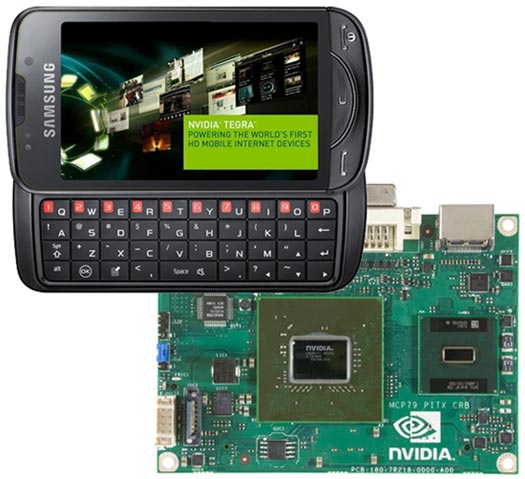
The two core components of NVIDIA's mobile strategy: ION and Tegra
Given how difficult the last twelve months have been for NVIDIA, it's easy to wonder if the company's decision to focus on Tegra is correct. To date, the GPU designer has spent some $600 million on Tegra development, with nary a cent in revenue to show for it just yet. Viewed strictly in the short term, it might seem that NVIDIA has mistakenly pumped a good deal of cash into a niche product at a time when it could ill afford to do so. Longer-term, however, there's good reason to think that Tegra really could grow to become a revenue pillar. To understand why, we'll first need to examine the GPU market as a whole.
NVIDIA has spent the better part of a decade establishing itself as a major GPU player in everything from notebooks to workstations, but the imminent introduction of new products and technologies from competitors like Intel could detrimentally impact the company's bottom line, particularly as these competing products transition to smaller process nodes and more advanced designs. Up until now, every CPU in existence had to be paired with a GPU that was either integrated into the motherboard or sold separately as a discrete solution; NVIDIA competes in both of these markets with its various integrated chipsets and discrete cards.