|
|
| The GeForce GTX 275 | ||||
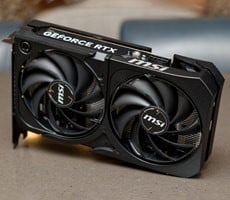
This will no doubt be an exciting day for graphics card aficionados. As we've shown you here, AMD has literally just launched a brand new more powerful, single-GPU based Radeon, dubbed the Radeon HD 4890. However, arch rival NVIDIA has something on tap as well, in the form of the GeForce GTX 275. And wouldn't you know it, the GTX 275 is positioned right alongside AMD's latest offering.
The core GPU technology employed in the GeForce GTX 275, is essentially identical to the GeForce GTX 280, save for the fact that the GT200b GPU used on the 275 is manufactured at 55nm. As such, we won't rehash the same information we've covered in the past again in this article. If, however, you'd like to learn more about what the GT200, and the GT200B by extension are made of, be sure to check out our coverage of the original GeForce GTX 280 and GTX 260 launch from June of last year. While you're at it, our coverage of the recently released GeForce GTX 295--which also uses the same GPU--is available right here. Reading those two articles will lay all of the foundation necessary to understand what's at the heart of the GeForce GTX 275. |
| Our Test System and 3D Mark Vantage | ||||||||||||
HOW WE CONFIGURED THE TEST SYSTEM: We tested the graphics cards in this article on an Gigabyte GA-EX58 Extreme motherboard powered by a Core i7 920 quad-core processor and 6GB of OCZ DDR3 RAM. The first thing we did when configuring these test system was enter the system BIOS and set all values to their "optimized" or "high performance" default settings. Then we manually configured the memory timings and disabled any integrated peripherals that wouldn't be put to use. The hard drive was then formatted, and Windows Vista Ultimate SP1 was installed. When the installation was complete we fully updated the OS, and installed the latest DX10 redist and various hotfixes, along with the necessary drivers and applications.
The NVIDIA powered cards sweep the top three spots in our 3DMark Vantage tests, besting all of the AMD offerings. NVIDIA's latest Release 185 drivers give the cards a nice boost in performance here, that allows even the GeForce GTX 260 Core 216 to pull ahead of the brand new Radeon HD 4890 in 3DMark Vantage. |
| Enemy Territory: Quake Wars | ||||||
The NVIDIA powered cards had another strong showing in our Enemy Territory: Quake Wars testing. Here, the Radeon HD 4890 overclocked edition is able to pull ahead of the GeForce GTX 260 Core 216, as is the reference clocked card at 2560. But the reference GeForce GTX 275 is able to pull ahead of both--the margin of victory at 2560x1600 is exactly 1FPS. |
| Crysis | ||||||
Score one for AMD here, sort of. In our custom Crysis benchmark, the Radeon HD 4890 OC bests the GeForce GTX 275. The reference clocked Radeon HD 4890 also outpaces the new GTX 275, but only by the smallest of margins. The Radeon HD 4890 and GeForce GTX 275 couldn't be more closely matched then they are in Crysis. |
| FarCry 2 | ||||||
Score one for AMD here, sort of. In our custom Crysis benchmark, the Radeon HD 4890 OC bests the GeForce GTX 275. The reference clocked Radeon HD 4890 also outpaces the new GTX 275, but only by the smallest of margins. The Radeon HD 4890 and GeForce GTX 275 couldn't be more closely matched then they are in Crysis. |
| Left 4 Dead | ||||||
Although the framerates at both resolutions are somewhat higher, the results of our Left 4 Dead testing look very similar to those of FarCry 2 on the previous page. Once again, the GeForce GTX 275 outpaces the Radeon HD 4890 overclocked and reference clocked editions here. |
| Power Consumption and Noise | ||||
We'd like to cover a few final data points before bringing this article to a close. Throughout all of our benchmarking and testing, we monitored how much power our test systems were consuming using a power meter. Our goal was to give you an idea as to how much power each configuration used while idling and under a heavy workload. Please keep in mind that we were testing total system power consumption at the outlet here, not just the power being drawn by the motherboards alone.
We had somewhat surprising results with regard to the GeForce GTX 275's power consumption. At idle, it consumed slightly less power than the GTX 285,which is to be expected considering the GTX 275 is clocked a bit lower and is outfitted with fewer memory chips. Under load, however, the GeForce GTX 275 consumed slightly more power than the GTX 285. This is likely due to inevitable variations during the manufacturing of the GPUs, and higher utilization of the GTX 275's 448-bit memory bus. |
| Our Summary and Conclusion | ||||
Performance Summary: The new GeForce GTX 275 performed exactly as expected in comparison to NVIDIA's other current GTX-series offerings. As its name suggests, the GeForce GTX 275's performance should fall somewhere in between the GeForce GTX 285 and GTX 260, and that is exactly what our benchmark results proved out. In comparison to AMD's newly released ATI Radeon HD 4890, more often than not, the GeForce GTX 275 finishes ahead of the Radeon HD 4890. In Crysis and at higher resolutions in ET:QW, however, the Radeons had a slight edge.
With its MSRP of $249, the new GeForce GTX 275 is an attractive product. At that price, it's a good $60 to $90 less expensive than most GeForce GTX 285 cards, despite offering about 85% to 90% of the performance of NVIDIA's current flagship single-GPU powered card. $249 is also a fair price in light of the latest information we have on AMD's pricing of the ATI Radeon HD 4890, which should fall somewhere in between $229 and $249 for reference cards, depending on the board partner and the availability of mail in rebates.
|