



Linux Exec Guesses PCs Will Be Free With Data Plan Soon

Software pioneer Bill Gates always wanted a PC on every desk in the
world, but we aren't quite sure he envisioned it happening like this.
In much the same way as the cellphone industry took off in the 1990s
with the advent of the "free-on-contract" phone, a Linux bigwig is
suggesting that PCs are the next to follow in those footsteps.
Linux Foundation Executive Director Jim Zemlin, in a recent presentation at the O'Reilly OSCON (Open Source Convention), told onlookers that a trend would emerge in which consumers would be blessed with free computers in exchange for signing onto a cellular data plan. The funny thing is, this prophecy isn't much a prophecy at all. In fact, Sprint is already offering up a netbook for just $0.99 when purchased in conjunction with a two-year mobile broadband plan. The deal works like this: you agree to pay Sprint a set amount per month for a certain amount of mobile broadband, and you get the netbook (with a built-in WWAN modem) for under a dollar after rebate.
Other mobile carriers in the world have struck up similar options, but Linux followers are hoping that this is the big break that the open source OS needs to grab a foothold in the mobile notebook market. Zemlin predicts that by offering Linux-based netbooks for less, carriers can develop their own Linux-compatible app stores and include them right on the machines. When buyers open them up, they're automatically encouraged to download apps, and carriers could arrange for some of that money to be funneled back to them.
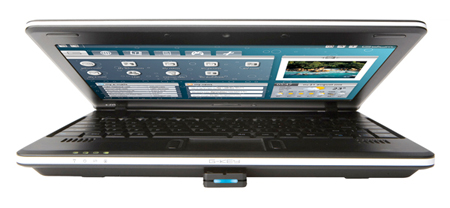
So, do you think the subsidized computer is the thing Linux needs to boost adoption? We aren't so sure. While people are certainly fond of "free," they aren't so fond of "free with strings attached." We're still waiting to see if consumers are actually willing to fork out upwards of $60 per month to get a netbook on the cheap, and given that only that netbook can take advantage of the data plan, that's just one more hurdle the industry has to deal with before convincing people of the value proposition.
Linux Foundation Executive Director Jim Zemlin, in a recent presentation at the O'Reilly OSCON (Open Source Convention), told onlookers that a trend would emerge in which consumers would be blessed with free computers in exchange for signing onto a cellular data plan. The funny thing is, this prophecy isn't much a prophecy at all. In fact, Sprint is already offering up a netbook for just $0.99 when purchased in conjunction with a two-year mobile broadband plan. The deal works like this: you agree to pay Sprint a set amount per month for a certain amount of mobile broadband, and you get the netbook (with a built-in WWAN modem) for under a dollar after rebate.
Other mobile carriers in the world have struck up similar options, but Linux followers are hoping that this is the big break that the open source OS needs to grab a foothold in the mobile notebook market. Zemlin predicts that by offering Linux-based netbooks for less, carriers can develop their own Linux-compatible app stores and include them right on the machines. When buyers open them up, they're automatically encouraged to download apps, and carriers could arrange for some of that money to be funneled back to them.
So, do you think the subsidized computer is the thing Linux needs to boost adoption? We aren't so sure. While people are certainly fond of "free," they aren't so fond of "free with strings attached." We're still waiting to see if consumers are actually willing to fork out upwards of $60 per month to get a netbook on the cheap, and given that only that netbook can take advantage of the data plan, that's just one more hurdle the industry has to deal with before convincing people of the value proposition.



