



Could Netbooks Take Hold In The Corporate World?

Considering that so many corporations are in the business of making
netbooks, one may assume that netbooks may be good in the business.
InfoWorld took a look at the viability of using netbooks within the
traditional corporate infrastructure, and it got us to thinking about
the subject. Today, few -- if any -- companies use netbooks as their
standard issue machines. On the same token, few -- if any -- businesses
use massive 16" or 17" notebooks as their standard issue machines. It's
easy to assume that businesses simply use the "ones in the middle"
because it's the easiest decision to make, but here are a few of our
thoughts on why netbooks aren't quite ready for the corporate act.
The biggest things netbooks offer to businesses are as follows: 1) low cost and 2) long battery life. With all those flights to Asia planned, having a machine that can last at least half the flight would be great, and of course, paying $400 or $500 per machine for employees sure beats paying upwards of $1,000 for a standard 14" or 15" notebook. Beyond that, the benefits are few and far between. For starters, most netbooks aren't powerful enough to handle everyday stresses of corporate life. 1GB of RAM just doesn't cut it anymore, and Intel's Atom (and similar) -- while respectable -- doesn't boast the computational abilities needed to crunch Excel sheets. Also, many netbooks do not have an internal optical drive, which could obviously cause problems in the workplace.
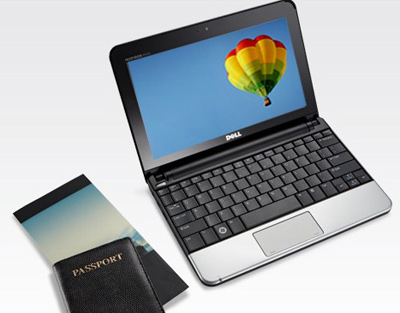
Additionally, no current netbook has a full size keyboard, and generally speaking, these less-than-standard boards slow down typing and could definitely frustrate workers who are simply set in their ways. Couple that with smaller than usual trackpads, and you can see that the complaints would probably start pouring in should netbooks overtake typical 15" notebooks within the office. Also, the 7" to 10" display is far, far too small for many workers. Imagine having to juggle five or six Excel sheets, an email client and a few IM messages with only 8" or so of screen space. Not fun. Sure, one could argue that workers could take advantage of a secondary display when in an office setting, but no current netbook is actually tailored to work with a docking station.
All in all, we don't really see a case for netbooks replacing standard notebooks in the corporate world. As we've outlined, the negatives simply outweigh the positives. There's always the chance that one or two employees would rather use a netbook, but to say that these miniature laptops are ready to be rolled out en masse would be stretching things. Of course, all that could change when desktop-level CPUs are designed to be more power efficient and LCD displays can be expanded by simply stretching the edges, but we're probably 10 or more years away from that kind of zany, almost cartoon-like technology.

The biggest things netbooks offer to businesses are as follows: 1) low cost and 2) long battery life. With all those flights to Asia planned, having a machine that can last at least half the flight would be great, and of course, paying $400 or $500 per machine for employees sure beats paying upwards of $1,000 for a standard 14" or 15" notebook. Beyond that, the benefits are few and far between. For starters, most netbooks aren't powerful enough to handle everyday stresses of corporate life. 1GB of RAM just doesn't cut it anymore, and Intel's Atom (and similar) -- while respectable -- doesn't boast the computational abilities needed to crunch Excel sheets. Also, many netbooks do not have an internal optical drive, which could obviously cause problems in the workplace.
Additionally, no current netbook has a full size keyboard, and generally speaking, these less-than-standard boards slow down typing and could definitely frustrate workers who are simply set in their ways. Couple that with smaller than usual trackpads, and you can see that the complaints would probably start pouring in should netbooks overtake typical 15" notebooks within the office. Also, the 7" to 10" display is far, far too small for many workers. Imagine having to juggle five or six Excel sheets, an email client and a few IM messages with only 8" or so of screen space. Not fun. Sure, one could argue that workers could take advantage of a secondary display when in an office setting, but no current netbook is actually tailored to work with a docking station.
All in all, we don't really see a case for netbooks replacing standard notebooks in the corporate world. As we've outlined, the negatives simply outweigh the positives. There's always the chance that one or two employees would rather use a netbook, but to say that these miniature laptops are ready to be rolled out en masse would be stretching things. Of course, all that could change when desktop-level CPUs are designed to be more power efficient and LCD displays can be expanded by simply stretching the edges, but we're probably 10 or more years away from that kind of zany, almost cartoon-like technology.




